Ceiling Fan: A Complete Guide to Choosing, Installing, and Getting the Most Out of Your Ceiling Fan

Introduction: Why Millions of Homes Choose a Ceiling Fan
A ceiling fan can reduce the feeling of heat by up to 8 degrees Celsius without using even a fraction of what an air conditioner consumes. That is real savings on your electricity bill every month. With energy prices rising every year, more families are looking for smart alternatives to stay cool without spending too much.
The ceiling fan has been a proven solution in homes around the world for decades. It is not a passing trend. It is a practical tool that works in summer to cool you down and in winter to distribute heat more efficiently throughout the room.
This guide explains everything you need to know about ceiling fans. From choosing the right size to installing it safely, you will find clear and direct information here to make the best decision for your home or business.
What Is a Ceiling Fan and How Does It Work
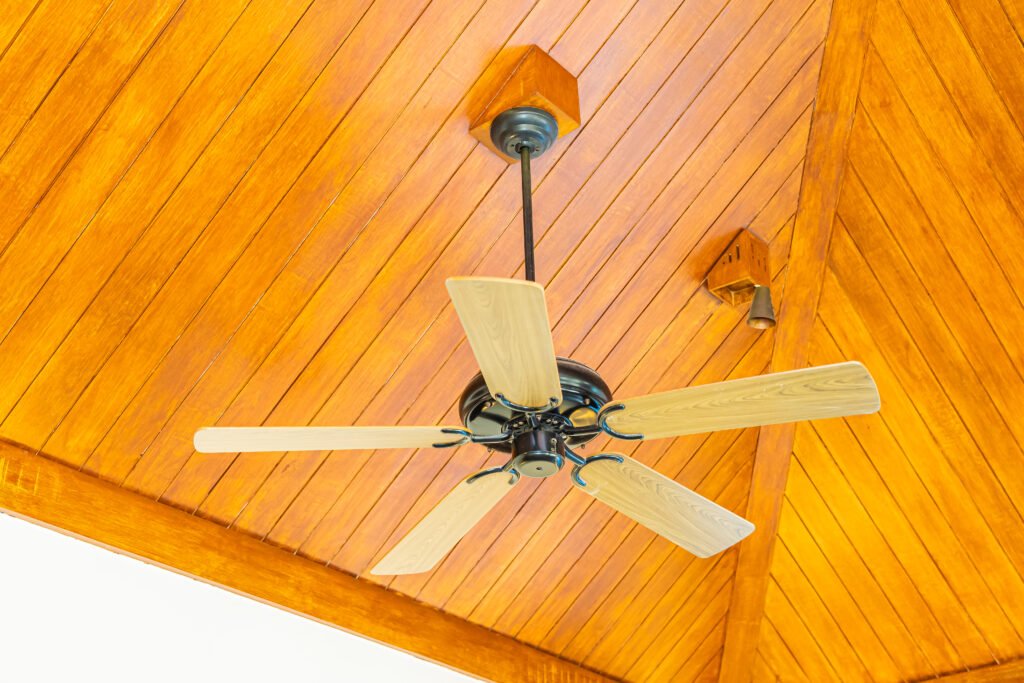
A ceiling fan is an electrical device installed on the ceiling of a room that moves air using rotating blades. The central motor spins the blades, which create an airflow that makes the perceived temperature feel cooler. It does not lower the actual room temperature like an air conditioner does, but it does make the body feel less heat.
The trick is in the effect that moving air has on your skin. When air circulates around your body, the evaporation of sweat happens faster, and that produces an immediate feeling of coolness. So even though the thermometer reads the same temperature, you will feel more comfortable with a ceiling fan running.
In winter, many ceiling fans have a function that reverses the direction the blades spin. When the blades spin in the opposite direction, they push the warm air that collects near the ceiling downward, making heating work more efficiently and also reducing energy consumption during the cold months.
The Real Benefits of Having a Ceiling Fan at Home
The most obvious benefit is savings on your electricity bill. A ceiling fan consumes between 15 and 75 watts depending on the model and speed setting. A standard air conditioner consumes between 900 and 3500 watts. The difference is enormous and shows up clearly at the end of the month.
Another important benefit is comfort throughout the entire year. It cools you in summer and distributes heat in winter. That means one single device serves you across all four seasons, which makes the initial investment pay off much faster than you might expect.
Ceiling fans are also quiet when they are good quality. A well-built motor makes no noise, which is essential for bedrooms and rooms where you need to rest. Also, unlike floor fans, they take up no floor space and do not pose a danger to young children or pets.
Decoration is another point in their favor. Modern models have elegant designs that fit perfectly into any type of interior, from rustic styles to modern and minimalist ones. There are options with built-in lighting that also replace the ceiling light fixture, combining two functions in a single product.
How to Choose the Right Ceiling Fan Size
The size of the ceiling fan is the most important thing to consider before buying. A fan that is too small will not move enough air to cool the room. One that is too large can look out of place and create uncomfortable air drafts.
Size is measured by the total diameter of the blades, also called the blade span. The general rule is simple: the larger the room, the larger the fan diameter should be. Here is a quick reference to guide you:
| Room Size | Recommended Fan Diameter |
|---|---|
| Less than 10 m² | 90 cm or less |
| 10 m² to 20 m² | 105 cm to 120 cm |
| 20 m² to 35 m² | 130 cm to 150 cm |
| More than 35 m² | 150 cm or more, or two fans |
| Industrial spaces | 180 cm to 300 cm |
You also need to consider ceiling height. If your ceiling is less than 2.5 meters high, you need a low profile or hugger fan that installs flush against the ceiling without a downrod extension. If the ceiling exceeds 3 meters, it is worth using a downrod so the blades hang at the right height and move air effectively.
Types of Ceiling Fans: Which One Is Best for You
Not all ceiling fans are the same. There are several types designed for different needs, spaces, and budgets. Knowing the differences helps you choose the one you actually need.
Ceiling Fan with Light
This model has a lamp built into the center of the unit. It is ideal for rooms where the fan will replace the main lighting fixture. Many models come with LED bulbs included that use very little energy. It is the most popular option for bedrooms and living rooms because it combines two functions in a single installation point.
Ceiling Fan without Light
This model only moves air with no lighting system included. It is simpler and generally more affordable. It is used in rooms that already have good lighting and only need air circulation. It is also a common option for covered porches and terraces.
Ceiling Fan with Remote Control
Many modern fans include a remote control or are compatible with smartphone apps. This feature is very convenient for bedrooms where you do not want to get up to change the speed or turn the fan off. Some models are also compatible with voice assistants like Alexa or Google Home.
Industrial Ceiling Fan
These fans are large, powerful, and designed for commercial or industrial spaces such as workshops, warehouses, gyms, or stores. They move large volumes of air and are built to run many hours a day without overheating. They are not the quietest option, but they are the most efficient for large spaces.
Outdoor Ceiling Fan
If you have a covered terrace, a porch, or a garden with a roof, there is a special version designed to resist humidity and dust. These models have a water resistance rating and are not damaged by rain or condensation. They are perfect for outdoor spaces where you want to enjoy the cool air without the discomfort of heat.
What to Look at in Technical Specifications Before Buying
When you read the technical sheet of a ceiling fan, there are several numbers that really matter. Ignoring them can mean buying a product that does not perform the way you expected.
Airflow is measured in cubic meters per hour (m³/h). This number tells you how much air the fan moves in one hour. The higher the number, the cooler you will feel. For a room of 20 m², look for a fan with at least 3000 m³/h at its maximum speed.
Power consumption in watts (W) determines how much you spend on electricity. A good energy-efficient ceiling fan consumes less than 50 W even at high speed. Models with a DC (direct current) motor are the most efficient and can consume up to 70% less than traditional AC (alternating current) motor models.
Noise level is measured in decibels (dB). For a bedroom, look for fans with less than 40 dB at maximum speed. DC motors are generally quieter than AC motors, which makes them preferable for spaces where noise matters.
The number of speed settings also counts. Most fans have three speeds, but premium models can have six or more. More speed options means more control over your comfort level and energy consumption.
The Best Materials for Ceiling Fan Blades
The blades are the hardest-working part of a ceiling fan. Their material affects both performance and durability as well as the look of the product.
Solid wood blades are the most elegant and the heaviest. They move a lot of air and have a natural finish that works well in classic or rustic decor. Their only downside is that they are not suitable for very humid environments because wood can warp over time.
MDF or compressed wood blades are more affordable and quite common in mid-range models. They are more resistant to humidity than solid wood and have finishes that closely imitate natural wood. They are a good option if you want a balance between appearance and price.
ABS or plastic blades are the lightest and the most resistant to humidity. They are ideal for outdoor fans or bathroom installations. They have less visual elegance, but they are practical and durable. Many industrial fans use blades made from this material.
Metal or aluminum blades are found mainly in industrial fans or in modern minimalist designs. They are very resistant but can make more noise if they are not properly balanced. In quality models, blade balancing is done at the factory to prevent vibrations and noise.
How to Install a Ceiling Fan Safely
Installing a ceiling fan is not complicated if you follow the right steps. But if you have no experience with electrical installations, the safest option is to hire a professional electrician. A mistake in the electrical installation can be dangerous.
The first step is always to cut the electrical power from the distribution panel before touching any wire. Never work with the power on. Use a voltage tester to make sure there is no current before you start.
The fan must be installed on a ceiling box specifically rated for ceiling fans, which can support the weight and vibration of the unit. A regular ceiling box designed for light fixtures is not strong enough and can come loose over time. If you do not have the right box, install one before continuing.
Connect the wires following the manufacturer’s manual. Most fans have three wires: live, neutral, and ground. The ground wire is the safety wire and must never be left out. Once the wires are connected, attach the fan body to the ceiling box, install the blades, and check that everything is firmly secured before restoring power.
Turn the fan on at low speed first and check that it does not vibrate or make unusual noises. If the blades are not properly balanced, the fan will vibrate. Many manufacturers include small counterweights in the box to adjust blade balance if needed.
Ceiling Fan in Winter: How to Use It to Save on Heating
Many people turn off the ceiling fan in winter and store it away until the following summer. That is a mistake that costs money. A ceiling fan used correctly in winter can reduce heating consumption by between 10% and 15%.
Heat rises. That is a basic principle of physics. In winter, warm air generated by radiators or central heating rises to the ceiling and stays there, while you keep feeling cold near the floor. The ceiling fan in winter mode spins in the reverse direction at low speed, pushing that warm air accumulated at the ceiling toward the walls and then downward, redistributing it throughout the entire room.
To activate winter mode, look for a small switch on the fan motor or use the remote control if your model has one. Make sure to set it to low speed. If it runs too fast in winter, it will create a cold air draft that produces the opposite effect from what you are looking for.
Ceiling Fan Maintenance: When and How to Clean It
A ceiling fan that is not cleaned regularly loses efficiency, makes more noise, and accumulates dust that then falls onto the furniture and people below. The good news is that maintenance is simple and does not require any special tools.
Clean the blades at least once every two months, or more often if you live in a dusty environment. Dust accumulates especially on the upper edge of the blades, which is the part that creates the most friction with the air. Use a damp cloth or a microfiber brush to clean them. Never use harsh chemical products that could damage the finish.
Also check that the screws holding the blades to the motor are tight. Over time, vibrations can loosen them, which causes noise and can be dangerous. If the fan starts making a noise it did not make before, the first thing you should check is the blade screws.
Lubricate the motor once a year if the manufacturer recommends it. Some motors are sealed and need no lubrication. Check the manual to find out what type of motor your fan has. Regular maintenance can extend the useful life of the fan many years beyond what you might expect.
Ceiling Fan or Air Conditioner: Which One Is Worth More
This is a question many people ask before buying. The answer depends on your situation, your budget, and the climate where you live. There is no single answer that works for everyone.
An air conditioner is more powerful. It lowers the actual temperature of the room and is ideal for very hot climates where temperatures exceed 35 degrees for weeks at a time. But its electricity consumption is very high and its installation cost is also high. A mid-range split unit can cost between 600 and 1500 euros including the unit and installation.
A ceiling fan is more affordable in every sense. It costs less to buy, less to install, and much less to run. In mild climates or on summer nights when the temperature naturally drops, the fan is more than enough to sleep comfortably. Combined with opening windows at night to let in fresh air, the fan can do an excellent job without any need for air conditioning.
The best solution for many homes is to have both. Use the ceiling fan most of the time and turn on the air conditioner only when the heat is extreme. That combination gives you maximum comfort with the lowest possible cost. Many studies show that using a fan together with air conditioning allows you to raise the thermostat from 24 to 27 degrees without losing comfort, which significantly reduces air conditioner consumption.
Ceiling Fan Brands: Names Worth Knowing
The ceiling fan market has many brands, and not all of them offer the same quality. Knowing the most recognized brands helps you avoid purchases you will regret in a short time.
Casafan is a German brand with a very good reputation in Europe. Their fans are quiet, efficient, and have a modern design. They are a mid to high range option with an excellent quality-to-price ratio for residential use.
Hunter Fan is one of the oldest brands in the industry, with more than 130 years of ceiling fan manufacturing. Their products are known for their durability and warranty. They are especially popular in the American market but are also easy to find in Europe.
Faro Barcelona is a Spanish brand with very elegant and varied designs. It balances function and aesthetics well and has a wide range of models for all types of interiors. It is an excellent option if design matters as much as performance.
Budget brands like Orbegozo are more affordable and very present in the market. They offer good functionality at accessible prices, although their motors can be noisier than premium brand motors. They are a good option if your budget is tight and the room is not a bedroom.
Frequently Asked Questions About Ceiling Fans
These are the questions that come up most often when someone is thinking about buying a ceiling fan. The answers are direct and to the point.
Is it hard to install a ceiling fan?
If there is already an electrical box in the ceiling and you have basic electrical knowledge, you can install it yourself in less than two hours. If you have no experience with electrical work, ask a professional for help. It is not worth taking risks.
How many years does a ceiling fan last?
A good quality fan with regular maintenance can last between 10 and 20 years without problems. DC motors tend to have a longer useful life than traditional AC motors.
Can I use a ceiling fan in a bathroom?
Yes, but you must choose a model with certification for use in humid environments. Not all fans can handle bathroom humidity. Always check the IP rating of the product before buying it.
Does a ceiling fan use a lot of electricity?
No. A standard ceiling fan consumes between 15 and 75 W, much less than a washing machine, a television, or an air conditioner. If you want the lowest possible consumption, choose a model with a DC motor that can consume as little as 10 W at low speed.
How many fans do I need for a large house?
It depends on the layout of the house and the size of each room. In general, install one fan per main room. For very large living rooms over 35 m², consider installing two medium-sized fans instead of one large one.
Where to Buy a Ceiling Fan and What Price to Expect
Ceiling fans are available at hardware stores, large retail chains, lighting specialty stores, and online sales platforms. Each channel has its advantages and disadvantages.
In physical stores like Home Depot or Lowe’s you can see the product before buying it, which helps you evaluate the real quality and size. Staff can guide you and answer questions on the spot. The downside is that the selection may be more limited than online.
On Amazon or specialized lighting stores online you will find a much wider selection. You can compare models, read reviews from other buyers, and find more competitive prices. The downside is that you cannot see the product before receiving it.
As for price, basic ceiling fans without lighting start from around 50 dollars or euros. Mid-range models with light and remote control are between 100 and 250 dollars. Premium models from recognized brands with DC motors and elegant design can cost between 300 and 600 dollars or more. For industrial or commercial spaces, prices can exceed 1000 dollars.
Do not always buy the cheapest option. A very low-priced fan may have a noisy motor, consume more electricity than the spec sheet claims, or fail within a few years. Always look for the most balanced quality-to-price ratio within your budget.
Conclusion: A Ceiling Fan Is an Investment That Pays Off
A ceiling fan that is well chosen and correctly installed is one of the best decisions you can make to improve the comfort of your home and reduce your electricity bill at the same time. It is not a luxury. It is a practical, efficient, and long-lasting solution that works for you all year long.
Remember the key points: choose the right size for your room, look for a DC motor if energy efficiency is your priority, check the noise level if you are installing it in a bedroom, and do not forget the winter mode to save on heating costs as well.
If you still do not have a ceiling fan in your home, you now have all the information you need to choose the right model with confidence. Visit a specialty store or compare models online today and start enjoying greater comfort with lower energy consumption from the very first day.


Responses