Ceiling Lamps for Living Room: The Complete Buying Guide

Introduction: Why the Right Ceiling Lamp Changes Everything
Did you know that bad lighting can make a room feel 30% smaller than it actually is? That is not a small problem when your living room is the place where your family gathers, guests visit, and you spend most of your time at home. The ceiling lamp you choose does more than light up a room. It sets the mood, shapes how the space feels, and even affects how relaxed or alert you feel while sitting in it.
Most people spend hours picking the right sofa or the perfect rug, but they give almost no thought to the ceiling lamp. That is a mistake. The ceiling lamp is often the first thing someone notices when they walk into a living room. It sits right in the middle of your line of sight and it affects every corner of the room.
This guide covers everything you need to know about ceiling lamps for living rooms. You will learn about the different types, how to measure your space, which styles work best with different decor, and how to avoid the most common mistakes buyers make. By the end, you will know exactly what to look for and feel confident making a choice that works for your home.
What Are Ceiling Lamps and Why They Matter for Your Living Room
Ceiling lamps are light fixtures that are mounted directly to the ceiling. They are different from floor lamps or table lamps because they provide light from above, covering a wider area of the room. In a living room, this is important because you need broad, even light to see clearly and feel comfortable.
The living room is one of the most used spaces in any home. You watch TV there, read books, have conversations, and sometimes even work. Each of these activities needs a different kind of light. A good ceiling lamp can be the anchor of your whole lighting setup, giving you the base light that you then adjust with other fixtures.
Ceiling lamps also do something that most people overlook: they define the style of the room. A sleek, minimal ceiling lamp tells your guests you prefer modern design. A large chandelier says you like elegance. A simple flush mount says you care about function. Your lamp choice is a design decision just as much as it is a lighting decision.
The Most Common Types of Ceiling Lamps for Living Rooms
Not all ceiling lamps work the same way or look the same. Knowing the types helps you pick one that fits your room perfectly.
Flush Mount Ceiling Lamps
Flush mount lamps sit flat against the ceiling with no gap between the fixture and the ceiling surface. These are great for rooms with low ceilings because they do not hang down and take up space. They look clean and simple. If your living room ceiling is under 8 feet tall, a flush mount is usually the safest and most practical choice.
They come in many styles, from basic round shapes to decorative options with crystals or fabric shades. Modern flush mounts often use LED technology, which means they use less energy and last much longer than old bulb types. They are easy to install and widely available at most home improvement stores.
Semi Flush Mount Ceiling Lamps
Semi flush mounts hang a few inches below the ceiling, usually between 4 and 8 inches. This gives them more visual presence than a flat flush mount while still keeping them close enough to the ceiling that they work in rooms with standard ceiling heights. They are a great middle ground option.
These lamps often have a globe or drum shape and can look quite stylish. Many designers recommend semi flush mounts for living rooms because they add a bit of character without overwhelming the space. They work well with both traditional and modern decor styles.
Pendant Ceiling Lamps
Pendant lights hang from the ceiling on a cord, rod, or chain. They are usually used over kitchen islands or dining tables, but they can also work beautifully in living rooms, especially over a reading chair or a specific seating area. A single large pendant can act as a statement piece in a living room with high ceilings.
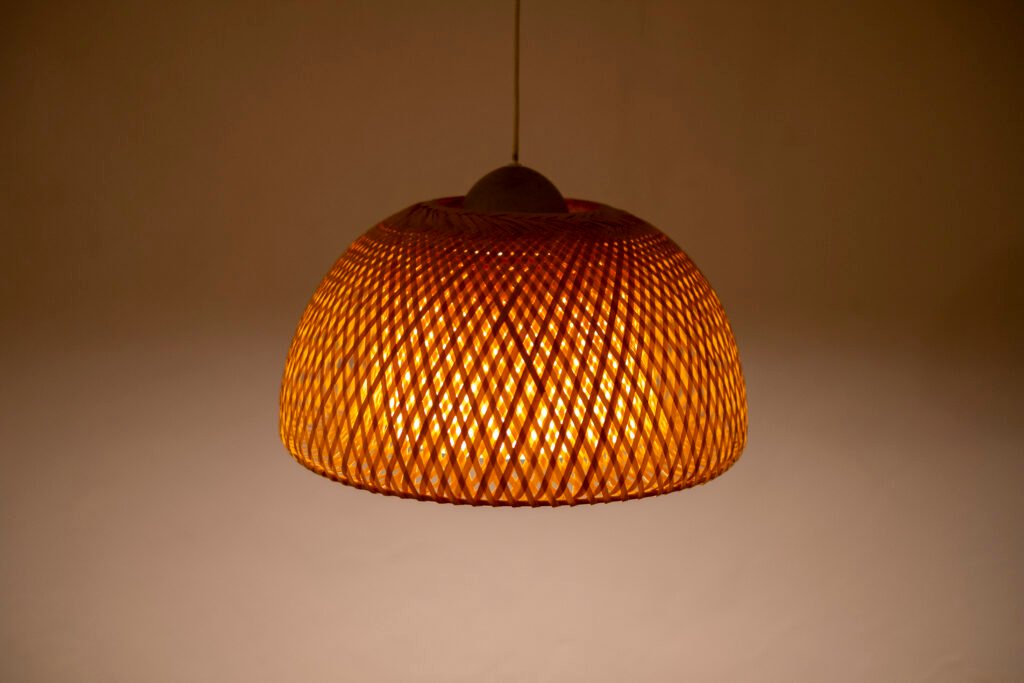
Pendant lamps come in an enormous range of styles. You can find them in glass, fabric, metal, rattan, and concrete. Because they hang lower, they create a more intimate and focused light compared to flush mounts. Just make sure there is enough clearance so no one bumps their head.
Chandeliers
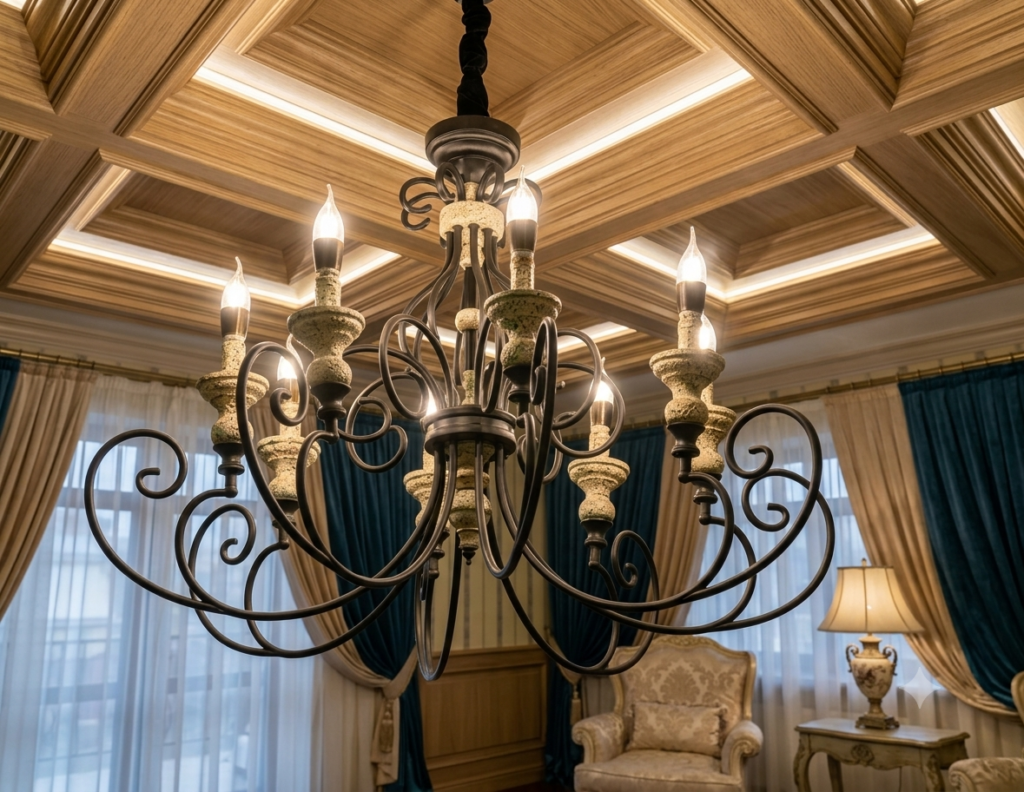
Chandeliers are the most decorative type of ceiling lamp. They typically have multiple arms holding several bulbs and are often made with glass, crystal, or metal. A chandelier makes a bold statement and adds a sense of luxury to any living room. However, they work best in rooms with ceilings that are at least 9 feet tall.
Modern chandeliers do not have to be old fashioned or overly fancy. Many designers now make chandeliers with clean lines, matte finishes, and minimalist shapes that feel fresh and current. If you want your living room to feel special, a chandelier is one of the best ways to achieve that.
Recessed Ceiling Lights
Recessed lights, also called can lights or downlights, are installed inside the ceiling so only the light itself is visible. They are great for a clean, modern look and work well in rooms where you do not want the fixture to draw attention. However, they are usually used as part of a larger lighting plan rather than as a single solution.
In a living room, you might combine recessed lights around the edges of the room with a central pendant or chandelier. This gives you flexible control over how bright and where the light falls. Recessed lighting is harder to install after the fact because it requires cutting into the ceiling.
Track Lighting
Track lighting involves a linear track mounted on the ceiling with multiple adjustable light heads. You can point each head in a different direction, which makes track lighting very flexible. It works well in living rooms where you want to highlight artwork, bookshelves, or specific areas of the room.
Track lighting has a modern or industrial look. It is not for everyone, but for people who want maximum flexibility and a contemporary style, it is an excellent choice. Many track light systems are now available with LED heads, which makes them energy efficient and long lasting.
How to Choose the Right Size Ceiling Lamp
Choosing the wrong size lamp is one of the most common mistakes people make. A lamp that is too small looks lost in a big room. A lamp that is too big can feel overwhelming and out of place.
There is a simple formula that designers use to get the right size. Add the length and width of your room together in feet. That number in inches is roughly the right diameter for your ceiling lamp. For example, if your living room is 12 feet by 15 feet, you add those together to get 27. Your lamp should be around 27 inches wide.
For ceiling height, here are some basic rules. Flush mounts work in rooms under 8 feet. Semi flush mounts work well in rooms that are 8 to 9 feet tall. Pendant lights and chandeliers work best when the ceiling is at least 9 feet high. For every foot of ceiling height above 9 feet, you can add about 3 inches to the length of the fixture drop.
The hanging height matters too. When a pendant or chandelier hangs in the middle of the room without any furniture below it, the bottom of the fixture should be at least 7 feet from the floor. This gives you clearance for walking under it without any risk of bumping into it.
Lighting Styles That Match Your Living Room Decor
Your ceiling lamp should feel like it belongs in your room. Choosing a lamp that clashes with your furniture and decor creates a disconnected look that feels off even if you cannot immediately explain why.
Modern and Contemporary Living Rooms
For a modern living room, look for ceiling lamps with clean lines, geometric shapes, and neutral colors like black, white, or brushed nickel. Materials like matte metal, frosted glass, and concrete work very well. Avoid ornate details, crystal drops, or anything with a very traditional or antique look.
LED panel lights or simple drum pendants are very popular in modern living rooms. They are sleek, functional, and do not draw too much attention to themselves. The focus stays on the furniture and the overall design of the room.
Traditional and Classic Living Rooms
Traditional living rooms benefit from chandeliers, ornate pendant lights, or semi flush mounts with decorative details. Materials like bronze, brass, antique silver, and crystal are classic choices. Fabric shades in neutral tones like cream, beige, or white also fit well in traditional spaces.
A multi arm chandelier with candle style bulbs is a timeless choice for a traditional living room. It adds warmth and elegance without feeling too trendy or out of date. These fixtures have been popular for hundreds of years and will continue to look good for a long time.
Rustic and Farmhouse Living Rooms
Rustic decor calls for natural materials and warm tones. Ceiling lamps made from wood, rattan, woven fiber, or wrought iron work beautifully in farmhouse style living rooms. Edison bulbs or warm white LEDs add to the cozy, natural feeling.
Wagon wheel chandeliers, woven pendant lights, and wood and metal combinations are all popular in rustic spaces. The goal is to create a feeling of warmth and connection to nature. Avoid anything that looks too polished or high tech in these rooms.
Bohemian and Eclectic Living Rooms
Bohemian style is more flexible and forgiving. You can mix materials and styles as long as the overall effect feels layered and personal. Macrame pendants, colorful glass shades, and rattan chandeliers all work well. The key is choosing something with texture and character.
Eclectic rooms can handle more unusual or artistic lamp choices. An oddly shaped pendant or a lamp with a bold color can become a real focal point. Just make sure it does not completely clash with the other colors in the room.
How to Get the Right Amount of Light in Your Living Room
Getting the right brightness is just as important as getting the right style. Too much light makes a room feel like an office. Too little light makes it hard to see and can feel depressing.
Lighting professionals use lumens to measure light output. For a living room, you generally want between 1,500 and 3,000 lumens from your ceiling lamp. If your room is large or you do not have many other light sources, go toward the higher end of that range. Smaller rooms or those with lots of windows and other lamps can use less.
Color temperature also matters a great deal. Light color is measured in Kelvins. A warm white light is around 2,700 to 3,000 Kelvins and creates a cozy, relaxing feel. A cool white light is around 4,000 Kelvins and feels brighter and more energizing. For living rooms, most designers recommend staying in the warm white range to keep the space feeling comfortable and inviting.
Getting a dimmable ceiling lamp is one of the smartest choices you can make. A dimmable lamp lets you adjust the light level to fit what you are doing. Bright light for games or reading, low light for watching movies or relaxing. Many modern LED ceiling lamps are compatible with standard dimmer switches, but always check the product description before buying.
Energy Efficiency and LED Ceiling Lamps
Energy costs matter. LED ceiling lamps use up to 75% less energy than old incandescent bulbs. They also last much longer. A typical LED bulb can last 15,000 to 25,000 hours, while an old incandescent bulb lasts only about 1,000 hours. That means less time on a ladder changing bulbs and less money spent on replacements.
Many ceiling lamps today come with built in LED modules, meaning the light source is part of the fixture and you do not change bulbs at all. These fixtures are very energy efficient and low maintenance. Just make sure the lamp you choose is compatible with a dimmer switch if you want that option, because not all built in LED modules support dimming.
The initial cost of an LED ceiling lamp might be higher than older fixture types, but the long term savings are significant. Over the life of the lamp, you will spend far less on electricity and replacement parts. This makes LED the smart financial choice as well as the environmentally friendly one.
Smart Ceiling Lamps for Living Rooms
Smart ceiling lamps have become much more affordable and popular in recent years. These are lamps that you can control with your phone, a voice assistant like Alexa or Google Home, or through an app. You can change the brightness, adjust the color temperature, set schedules, and even change the color of the light entirely on some models.
Smart lamps are especially useful for living rooms because the needs of the space change throughout the day. In the morning, you might want a bright, cool light to wake up. In the evening, a warm, dimmed light helps you wind down. A smart lamp lets you change these settings without getting up from the couch.Some smart ceiling lamps also connect to smart home systems and can sync with your TV, music, or alarm system. These features are not necessary for everyone, but they add a level of convenience that many people find very useful once they experience it. The setup is usually straightforward and most products include clear instructions.
Where to Buy Ceiling Lamps for Living Rooms
You have more options than ever when it comes to buying ceiling lamps. Home improvement stores like Home Depot and Lowe’s carry a wide selection at different price points. Furniture and decor stores like Wayfair, IKEA, and Restoration Hardware offer a range of styles from budget to premium.
Online shopping gives you access to the widest selection. Sites like Amazon, Wayfair, and specialty lighting retailers like Lumens or 1800lighting carry thousands of options. Reading reviews carefully before buying online is important because it is harder to judge size and quality from photos alone.
If you are looking for something unique or high end, visiting a local lighting showroom is worth the effort. Showroom staff can help you choose the right fixture and often carry brands that you will not find at big box stores. Seeing the lamp in person before buying it helps you avoid surprises when it arrives.
Common Mistakes to Avoid When Buying a Living Room Ceiling Lamp
A lot of buyers end up disappointed with their ceiling lamp because they made one of a few very predictable mistakes. Knowing these mistakes in advance saves you time, money, and frustration.
| Common Mistake | Why It Happens | How to Avoid It |
|---|---|---|
| Buying a lamp that is too small | Misjudging room size | Use the length plus width formula for sizing |
| Choosing the wrong color temperature | Not testing the light first | Stick to 2,700 to 3,000K for living rooms |
| Forgetting to check ceiling height | Focused only on style | Always measure before choosing a pendant or chandelier |
| Not getting a dimmable lamp | Assuming brightness is fixed | Choose LED lamps that support dimmer switches |
| Ignoring the wiring situation | Skipping the installation step | Check if your ceiling has existing wiring before buying |
One mistake that many people do not think about is matching the finish of the ceiling lamp to the other metal finishes in the room. If your door handles are brushed nickel and your lamp is polished gold, the room will feel inconsistent. Small details like this make a big difference in how pulled together a space looks.
Another mistake is choosing a lamp based on photos alone without checking the actual dimensions. Always read the product dimensions carefully. A lamp that looks large and impressive in a styled photo might be much smaller in person than you expected.
Installation Tips for Ceiling Lamps
Installing a ceiling lamp is not as hard as it might seem, but it does require following safety rules. If your home already has a ceiling light, replacing it with a new one is usually a straightforward job that a handy homeowner can do. If there is no existing wiring in the spot where you want the lamp, you will need an electrician to run a new circuit.
Always turn off the power at the breaker box before touching any wires. Use a voltage tester to confirm the power is off before you start disconnecting anything. Following these steps protects you from electrical shock, which can be very dangerous.
Most ceiling lamps come with installation instructions and all the hardware you need. Read the instructions completely before you start. Having a helper is useful because many fixtures are heavy and awkward to hold while also making connections. Take your time and do not rush the process.
How to Layer Lighting in Your Living Room
One ceiling lamp alone is rarely enough for a living room. Professional designers almost always recommend layering your lighting. This means using multiple types of light sources at different heights and positions to create a balanced, flexible environment.
The three layers of lighting are ambient, task, and accent. Ambient light is your main overhead light, usually from the ceiling lamp. Task lighting is focused light for specific activities, like reading lamps next to chairs. Accent lighting highlights specific features like artwork, shelves, or architectural details.
Your ceiling lamp provides the ambient layer. Adding floor lamps, table lamps, or wall sconces gives you task and accent layers. When all three work together, the room feels rich and dynamic rather than flat and one dimensional. You can also adjust each layer independently to change the mood of the room at different times of day.
Budget Guide: What to Expect at Every Price Point
Ceiling lamps for living rooms are available at almost every budget level. Knowing what to expect at each price range helps you make a realistic plan.
At the lower end, under $100, you can find basic flush mounts and simple pendants. These are functional and often decent looking, but the materials and build quality are usually basic. They work fine for renters or anyone who needs a quick, affordable solution.
In the $100 to $300 range, you start getting much better materials, more interesting designs, and better quality LEDs. Most of the popular styles are available in this price range. This is where most homeowners should focus their search because the value at this level is very strong.
Above $300, you find premium materials, artisan craftsmanship, and more exclusive designs. Chandeliers and statement pieces often fall in this range. If your living room is a priority space and you want a fixture that truly makes an impact, spending more here is worth it.
Very high end designer lamps can cost thousands of dollars. These are for buyers who see lighting as a true piece of art or who are furnishing a luxury home. For most people, excellent results are very achievable well below that level.
Ceiling Lamp Trends Worth Knowing About
Lighting trends change over time, and knowing what is popular right now can help you make a choice that feels current. However, be careful not to follow trends so closely that you pick something that will look dated in a few years. Classic shapes and neutral finishes tend to age better than very trendy statement pieces.
Right now, some of the most popular styles include organic shapes inspired by nature, warm brass and aged gold finishes, woven and rattan materials, and oversized fixtures that make a bold statement. Matte black finishes continue to be very popular in modern and contemporary spaces and they pair well with almost any color palette.
Biophilic design, which focuses on connecting interior spaces to nature, has pushed demand for lamps made from natural materials. Wood, stone, and woven fiber fixtures are all part of this trend. These choices also tend to have a timeless quality that outlasts faster moving style trends.
Sustainable and eco friendly lighting is also growing in popularity. Consumers are more aware of where products come from and how they are made. Lamps made from recycled materials or by ethical manufacturers are becoming easier to find and more sought after.
Conclusion: Make Your Living Room Shine With the Right Ceiling Lamp
The right ceiling lamp does more than light up a room. It changes how the space feels, affects your mood, shapes the style of your home, and even influences how much you spend on energy every month. It is one of the most impactful and cost effective changes you can make to a living room.
Start by knowing your ceiling height and room size. Use the sizing formula to get the right diameter. Think about the style of your existing decor and choose a lamp that fits naturally. Stick to warm white light for comfort, and get a dimmable fixture so you can adjust the mood as needed. Consider LED for long term savings and smart lamps if you want extra flexibility.
Do not let the wide variety of options overwhelm you. Use the information in this guide to narrow your choices and focus on what actually matters for your specific room. A little planning goes a long way when it comes to lighting.
Ready to find your perfect ceiling lamp? Visit a lighting showroom near you or browse a trusted online retailer like Wayfair or Lumens. Take your room measurements with you, keep your decor style in mind, and you will find the right lamp faster than you think. Your living room deserves great light, and now you have everything you need to make it happen.

Responses